Government
Wilkesboro's History
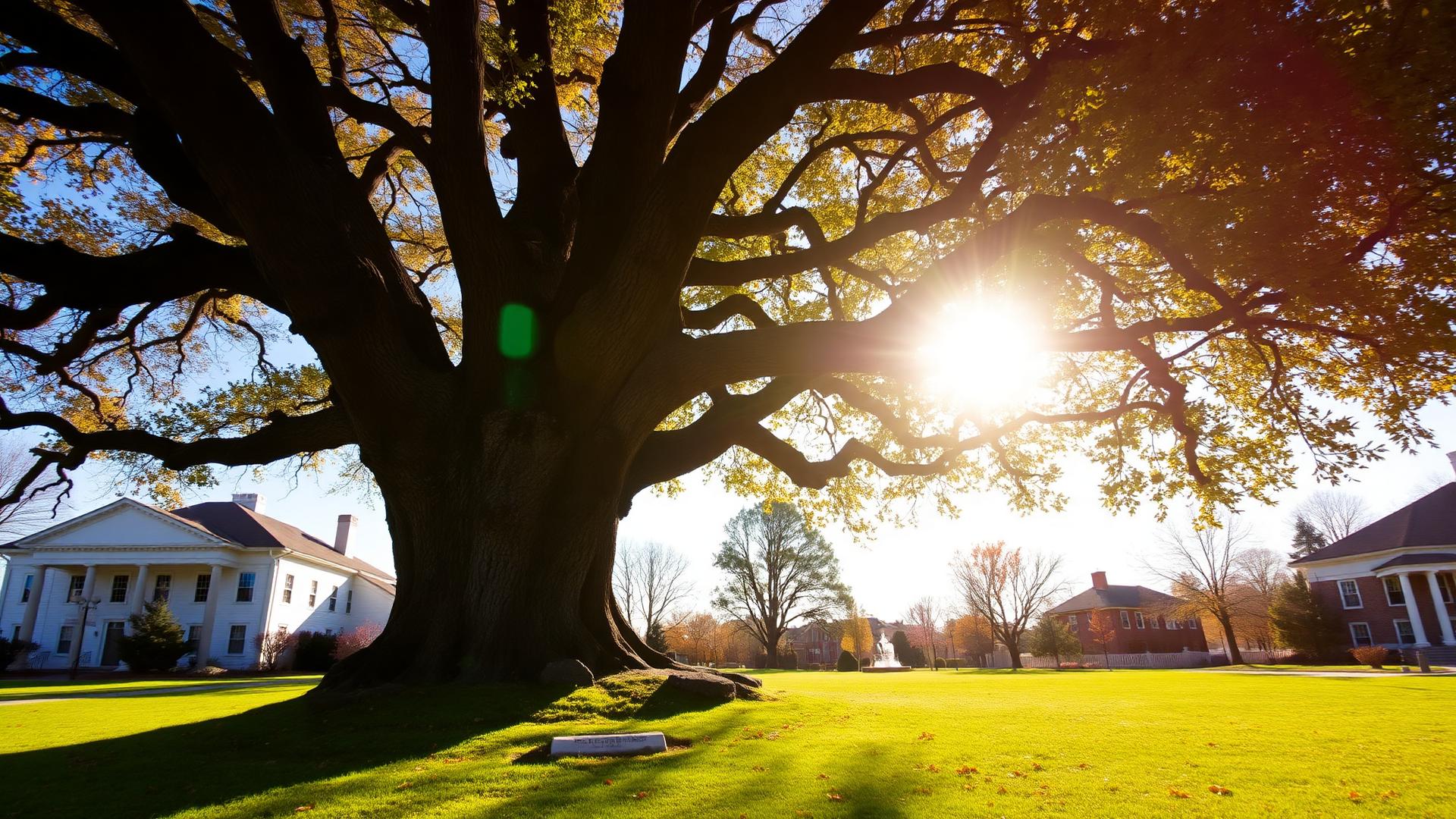
The Tory Oak, the old town cemetery, fire and police chiefs, and the records that carry Wilkesboro's history.
Wilkesboro is the county seat of Wilkes County, North Carolina, set along the south bank of the Yadkin River at the edge of the Blue Ridge.
The land was known to settlers as the Mulberry Fields, a broad river bottom on the trading path between the Piedmont and the mountain gaps. Farms took hold here in the 1750s and 1760s, and the crossing at the Yadkin drew a courthouse, a jail, and the small commercial row that became the town.
The Town's history pages carry the record of its founding, its governing board, its fire and police service, and the families recorded in its cemeteries.
- County formed
- 1777
- Named county seat
- 1800
- Incorporated
- 1847
- River
- Yadkin
Founding
A county named for a friend of the colonies
Wilkes County was formed in 1777 out of Surry County during the Revolution and named for John Wilkes, the member of the British Parliament who argued publicly for the American cause. The new county needed a seat of government, and the Mulberry Fields, near the center of the county and beside the river, was the natural place for it.
The courthouse town was laid out at the end of the eighteenth century and was known first as Wilkesborough. It served as the county seat from 1800 and was incorporated by the General Assembly in 1847. The street grid around the courthouse square, still legible downtown today, dates from that early plan.
For most of the nineteenth century Wilkesboro was a farming and county-business town: court weeks, land deeds, a jail, a handful of stores and taverns, churches, and the households that supported them.
Revolution
Benjamin Cleveland and the Tory Oak
Colonel Benjamin Cleveland, a Wilkes County landholder and militia officer, led men from these mountains to the Battle of Kings Mountain in October 1780, one of the turning points of the Revolution in the South. Cleveland's pursuit of Loyalist raiders afterward is the source of the town's best-known story.
By long tradition, Tories captured in the backcountry were hanged from a white oak on the courthouse grounds, and the tree carried the name Tory Oak for two centuries afterward. The Robert Cleveland log house, built by Benjamin's brother about 1779 and one of the oldest surviving structures in the county, still stands and is preserved as a museum property.
Nineteenth century
The jail, the courthouse, and Tom Dula
The Old Wilkes Jail, built in 1859 and 1860 beside the courthouse square, is the town's most complete surviving nineteenth-century public building. Its best-known prisoner was Tom Dula, held there in 1866 while awaiting trial for the killing of Laura Foster, the case that became the ballad 'Tom Dooley.' Zebulon B. Vance, the former governor, took the defense.
The 1902 Wilkes County Courthouse replaced its predecessors on the square. It now houses the Wilkes Heritage Museum, which keeps the county's records, artifacts, and historic house properties, and anchors the Wilkesboro historic district.
Growth
Railroad, river, and a second town
The railroad reached the Yadkin in 1890. Because the line stopped on the north bank, a new commercial town grew up opposite the county seat and incorporated the following year as North Wilkesboro. The two towns have shared a river, an economy, and a school system ever since while keeping separate governments.
Furniture, poultry, textiles, and trucking carried the local economy through the twentieth century, and Wilkesboro remained the seat of county government throughout.
The Yadkin also flooded, repeatedly and severely. The W. Kerr Scott Dam and Reservoir, completed by the Army Corps of Engineers in 1962 just upstream of town, ended the worst of it and left the county with a large recreational lake on its western edge.
Today
A working county seat
Wilkesboro today combines its historic core with the parks, greenway, and river access built along Cub Creek and the Yadkin, and with the Town's own utilities, public safety, and recreation services.
The pages below carry the detailed records the Town keeps: the succession of mayors, council members, and clerks; the fire and police chiefs; the retired firemen's roster; and the cemetery records used by genealogical researchers.